RavenStone Pest Guard delivers technical pest control services Nashville homeowners and facility managers rely on to maintain fortified, multi-layered structural perimeters. Operating across the limestone foundations and clay river basins of Davidson County, our technicians systematically isolate subterranean harborage zones and eliminate destructive insect and rodent colonies before biological contamination penetrates interior living quarters.
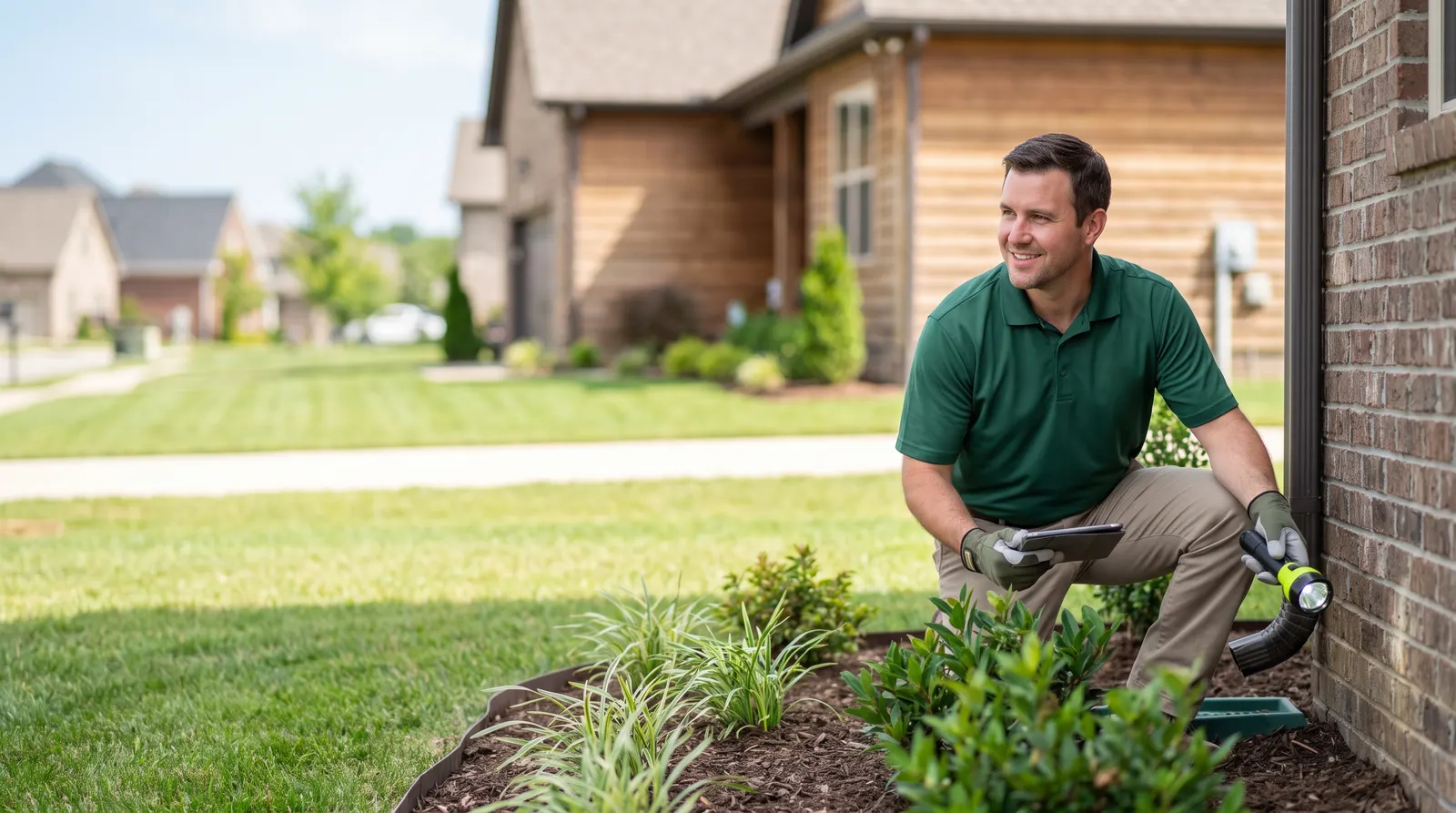
A pest control services company in Nashville is a licensed environmental management entity that systematically inspects, identifies, and eradicates biological pest populations from residential and commercial structures throughout Davidson County.
Every service reflects the same meticulous attention to detail, whether it's a single job or a larger pest control services project across Nashville.
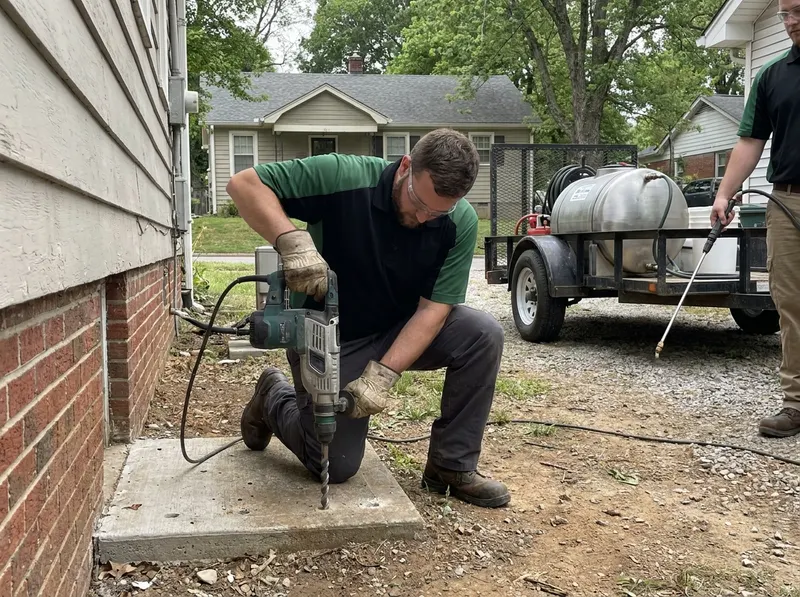
Liquid soil applications and discrete exterior monitoring systems engineered to neutralize Reticulitermes flavipes colonies before foraging worker termites breach masonry piers, sill plates, floor joists, and architectural subflooring. Technicians trench continuous 6-inch by 6-inch soil channels along foundation walls and inject non-repellent liquid termiticides, creating an undetectable chemical barrier that foraging termites transport directly back to the subterranean reproductive nest.
Get a quote →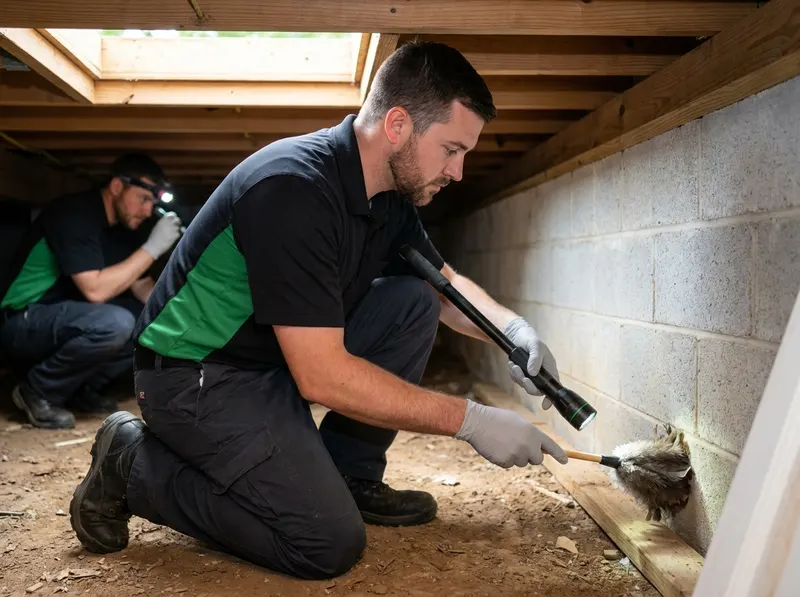
Specialized attic void dusting, partition-wall micro-injections, and non-toxic perimeter capture grids targeted specifically at Loxosceles reclusa harborage sites. Because brown recluse spiders navigate elevated surfaces on the tips of their tarsi rather than dragging their bodies across flat surfaces, traditional residual surface sprays prove ineffective; technicians inject inorganic amorphous silica dust and microcrystalline desiccant powders into dark, dry, undisturbed insulation voids, suspended ceiling spaces, and structural framing joints to mechanically dehydrate colonies.
Get a quote →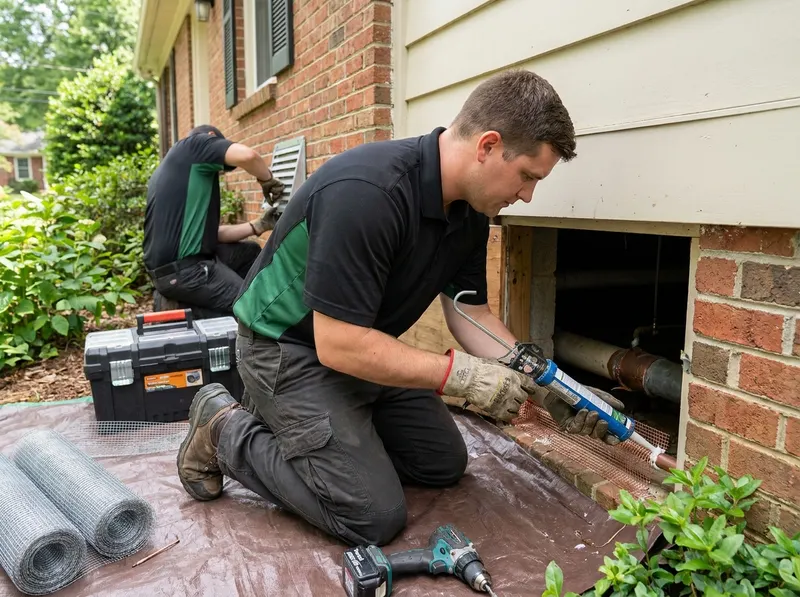
Permanent structural mechanical exclusion of Mus musculus and Rattus norvegicus using 1/4-inch heavy-gauge galvanized steel mesh, copper mesh, metal flashing, and expanding elastomeric polyurethane foam laced with abrasive particles. Technicians identify roofline transitions, crawl space vent gaps, utility pipe penetrations, and foundation settling cracks, sealing all points of entry measuring 1/4 inch or greater to prevent recurring attic and crawl space contamination while deploying interior mechanical traps and tamper-resistant exterior bait stations along exterior foundation walls.
Get a quote →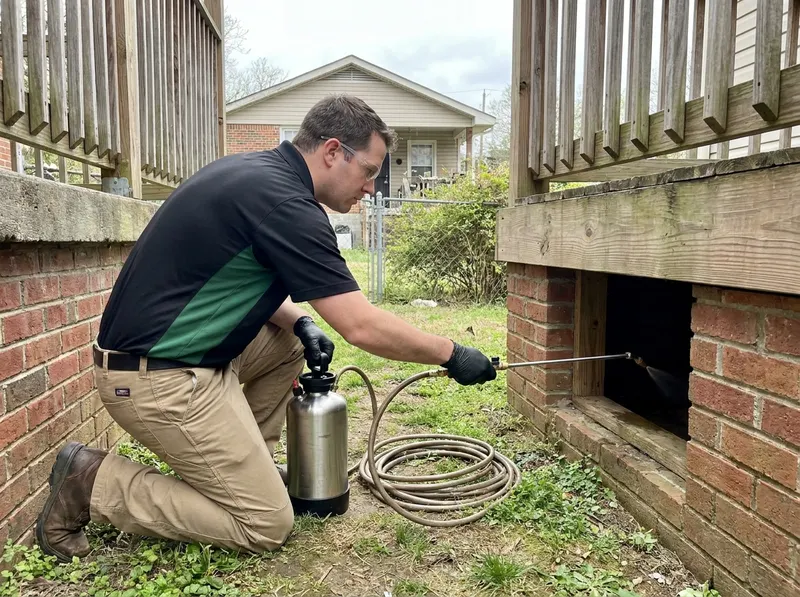
Application of advanced micro-encapsulated liquid barriers and water-resistant synthetic granular chemistries extending 3 feet up exterior foundation walls and 5 feet outward onto adjacent perimeter soil. This continuous protective band blocks overwintering crawling insects, including perimeter-invading ground beetles, centipedes, millipedes, silverfish, and field crickets, from exploiting weep screeds, stone veneer voids, and unsealed perimeter access doorways.
Get a quote →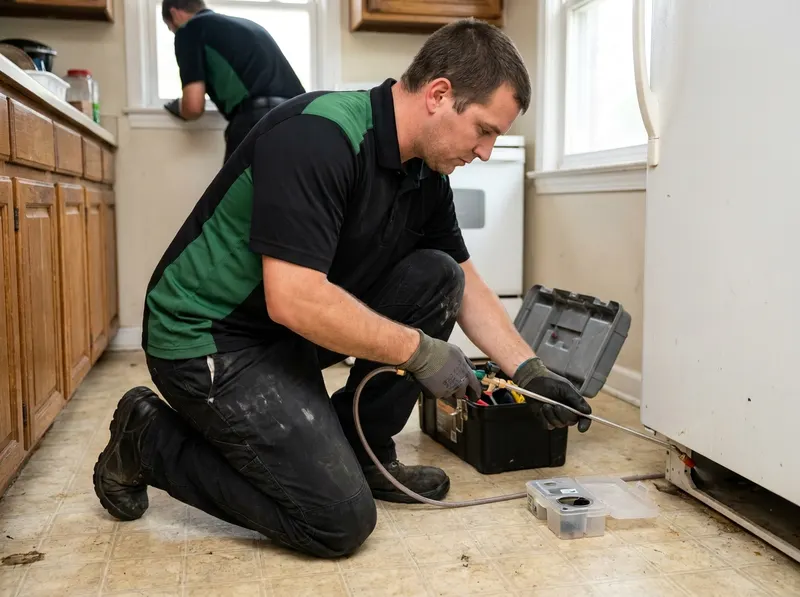
Integrated baiting protocols and Insect Growth Regulators (IGRs) designed to dismantle German cockroach (Blattella germanica) and Oriental cockroach (Blatta orientalis) reproductive cycles inside kitchens, bathrooms, wall cavities, and commercial plumbing chases. Technicians place microscopic bait matrices directly into dark harborage voids, appliance motor housings, and utility junctions, ensuring nymphs and reproductive females ingest active compounds that halt chitin formation and disrupt subsequent reproductive cycles.
Get a quote →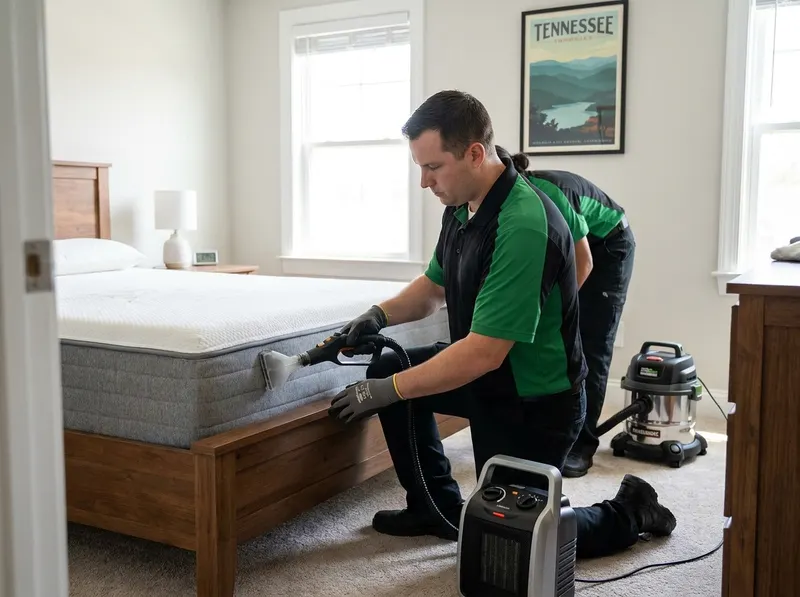
Comprehensive multi-tier eradication utilizing localized high-output thermal air systems, structural crack-and-crevice injections, and residual contact formulations targeting Cimex lectularius populations across all developmental stages. Technicians systematically disassemble bed frames, examine baseboard seams, inspect electrical outlets, and treat wall-to-carpet interfaces to eliminate adult insects, nymphs, and embryonic eggs in residential bedrooms and multi-family living units.
Get a quote →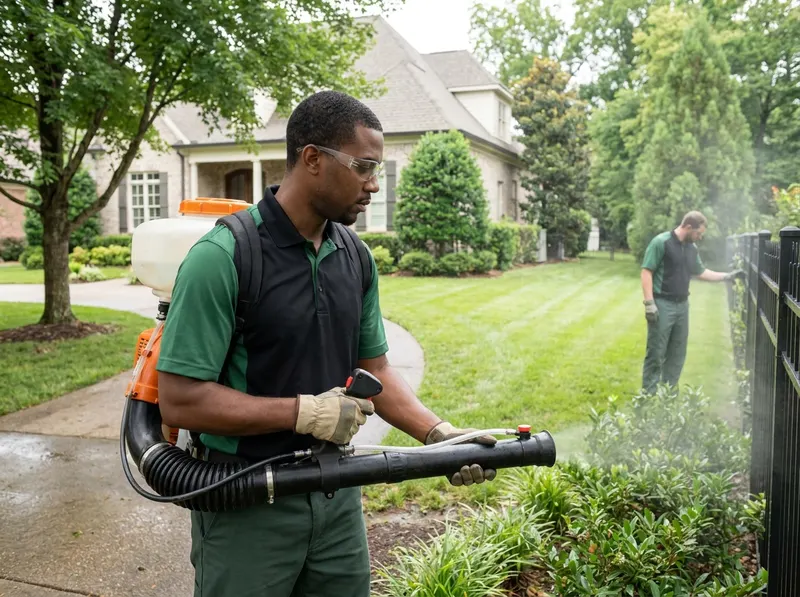
Targeted micro-droplet misting focusing directly on the underside of broadleaf foliage, ornamental shrubbery, ground-cover vegetation, and sheltered structural soffits where adult Culicidae mosquitoes seek daytime resting harborages. Technicians combine low-toxicity adulticides with micro-encapsulated juvenile hormone mimics and apply biological Bacillus thuringiensis israelensis (BTI) larvicide briquettes to non-flowing standing water sources, drainage basins, and catch basins to arrest larval transformation.
Get a quote →Direct precision aerosolization, high-reach power dusting, and physical nest detachment targeting Polistes paper wasps, Dolichovespula maculata (bald-faced hornets), Vespula yellowjackets, and wood-boring Xylocopa virginica (carpenter bees). Technicians treat and dismantle aerial comb structures suspended from second-story eaves, window frieze boards, structural fascia, and porch ceilings, applying residual repellent dust into hidden exterior voids to prevent returning foraging workers from reconstructing nests in the same nesting locations.
Get a quote →You get a firm, itemized quote for your pest control services before any work begins, no surprises, no pressure.
Careful prep, tidy work, and a full cleanup when we are done. We treat your home and belongings like our own.
The same trusted, background-checked team from the first call to the final check.
Selecting appropriate structural pest mitigation requires aligning the technical treatment approach with biological species behavior, local environmental moisture levels, and the architectural construction of your home. If you want immediate population knockdown for active indoor insect activity, choose targeted precision interior baiting, void dusting, and localized crack-and-crevice spot applications. If you want ongoing structural protection against invasive outdoor colonies migrating into living spaces, choose an exterior perimeter barrier defense program. The trade-off is that exterior barrier programs require consecutive quarterly refreshments every 90 days to withstand UV photodegradation, biological soil breakdown, and heavy Middle Tennessee rainfall, whereas interior-only treatments resolve isolated populations without preventing future seasonal exterior ingress through weep holes, mortar joints, and sill plates.
For wood-destroying subterranean termites, superficial perimeter surface sprays offer zero structural security; continuous liquid termiticide trenching or exterior bait monitoring systems are technically mandatory to intercept subterranean subterranean workers before they construct mud shelter tubes over masonry footings and compromise structural framing timbers. Residential homes constructed over open or unsealed crawl spaces throughout historic neighborhoods like Sylvan Park, Inglewood, or Woodbine benefit primarily from crawl space encapsulation, vapor barrier installation, and targeted micro-encapsulated foundation sprays, while modern slab-on-grade builds in Crieve Hall and Antioch demand perimeter soil injections and expansion-joint sealing. If you select single-event corrective spraying over systematic mechanical exclusion and biological habitat modification, you achieve short-term adult knockdown but leave the underlying breeding cycles, plumbing penetrations, and structural entry channels fully vulnerable to re-infestation within weeks. Balancing non-repellent micro-encapsulated chemistry with physical exclusion secures the building envelope from foundation footings to attic eaves while minimizing overall chemical volume within living areas.
Every project gets a firm, written price after an on-site visit. Ranges below for orientation.
Tell us about your pest control services job and we'll send a clear, written quote, usually the same day. Or just call and talk to a real Nashville pro.
(629) 319-7851
Nashville's geographic positioning within the humid subtropical climate of the Cumberland River basin produces persistent, intense seasonal biological pest pressure across Davidson County. The region's underlying geology, characterized by extensive Ordovician limestone formations, shallow soil layers, and intricate karst sinkhole topography, creates extensive subterranean moisture channels that support vast populations of subterranean termites and provide natural outdoor harborage for brown recluse spiders around areas like Radnor Lake State Park and the heavily wooded riparian corridors of the Shelby Bottoms Greenway. Nashville experiences over 47 inches of rainfall annually alongside prolonged summer humidity indices exceeding 85 percent, conditions that accelerate the biological decay of outdoor timber and drive wood-boring carpenter ants, moisture-seeking German cockroaches, and subterranean termite alates directly toward residential structural envelopes. Architectural variations across Nashville’s neighborhoods present distinct structural vulnerability profiles that demand localized technical approaches. In historic urban pockets such as Germantown, Belmont-Hillsboro, and East Nashville, historic homes built between 1890 and 1930 frequently stand on unsealed dry-stacked limestone footings, soft brick foundations, and earthen crawl spaces that lack modern moisture membranes. These damp crawl spaces, combined with aging heart-pine sill plates, act as natural migration routes for both subterranean termites and extensive brown recluse colonies that seek harborage in undisturbed floor insulation and floor joist cavities. Conversely, post-war mid-century neighborhoods like Crieve Hall, Inglewood, and Donelson feature brick veneer facades, slab-on-grade floors, and lower-clearance foundation vents that sit close to exterior ground level. During seasonal rainfall events, moisture accumulates against these brick veneers, allowing foraging Argentine ants, odorous house ants, and perimeter ground beetles to bypass foundation weeping holes and penetrate interior wall cavities. Furthermore, rapid urban infill and structural construction throughout The Nations and 12 South consistently disrupt historical subterranean soil profiles, dislodging dormant rodent networks of Norway rats and field mice from subterranean drainage paths and forcing them to seek harborage inside newly framed subfloors, soffits, and crawl space wall cavities. Maintaining robust structural defenses across these diverse geological and architectural zones requires adjusting chemical application depths, selecting specialized micro-encapsulated formulations that resist thermal degradation in high heat, and mechanically sealing physical ingress gaps rather than relying on superficial, generic broadcast spraying.
 RavenStone Pest Guard